
Identity Security
Money Well Spent: How To Pitch Your CFO To Prioritize Cybersecurity Investments

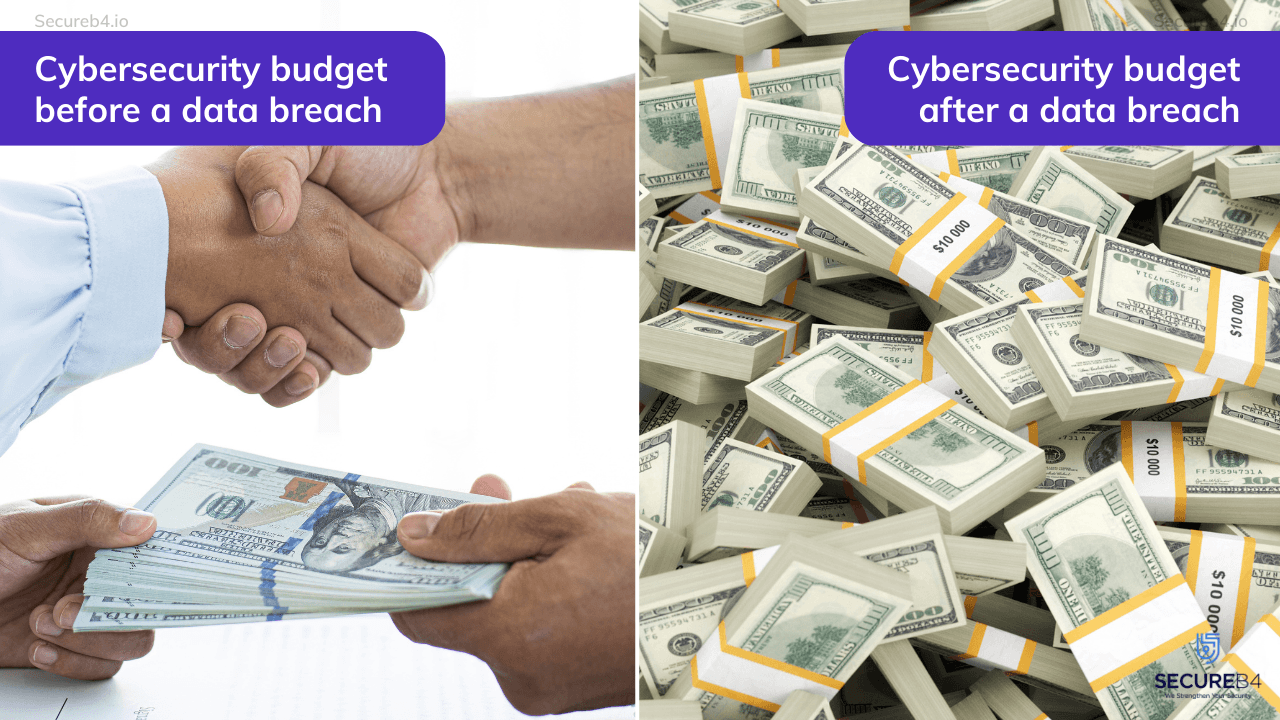
In today's fast-paced digital world, cybersecurity is more important than ever. Cyberattacks are becoming increasingly sophisticated and can have severe consequences for businesses of all sizes. In this article, let's discuss the steps to ask your CFO for money to protect your organization.
Step 1: Explain the Risks
The first step in asking your CFO for money is to explain the risks your organization faces if it needs to be properly protected. For example, cyberattacks can have a devastating impact on businesses. According to the Ponemon Institute's 2020 Cost of a Data Breach report, the average cost of a data breach was $3.86 million, up 1.5% from the previous year. This includes direct costs such as the cost of investigation, remediation, and legal fees, as well as indirect costs such as lost productivity and lost business.
Moreover, cyberattacks can also result in reputational damage. A 2020 survey by Deloitte found that 85% of consumers said they would not do business with a company if they had concerns about its cybersecurity practices. The loss of customer trust can lead to a significant decline in revenue.
Step 2: Emphasize the Cost of a Breach
It is essential to emphasize the cost of a breach to your organization. A data breach can result in a significant financial impact. According to the same Ponemon Institute report, the cost per lost or stolen record was $150. This includes the cost of investigation, notification, and legal fees. Furthermore, the report found that the average number of records lost or stolen in a data breach was 25,575. Therefore, the cost of a data breach can quickly add up.
Additionally, a data breach can also result in regulatory fines. Many countries have data protection laws, and businesses that fail to comply with these laws can face significant penalties. For example, the General Data Protection Regulation (GDPR) in the European Union can result in fines of up to 4% of a company's global revenue.
Step 3: Show How Cybersecurity Can Help the Bottom Line
Cybersecurity investments can help the bottom line of an organization. For example, security measures can increase the efficiency of operations by reducing downtime and minimizing the cost of recovery. Cybersecurity can also help maintain customer trust, increasing sales and revenue.
For example, a study by PwC found that customers are willing to pay more for products and services from companies with solid cybersecurity practices. In addition, the study found that 87% of consumers would take their business elsewhere if they did not trust a company to handle their data.
Moreover, cybersecurity investments can help businesses comply with regulatory requirements, avoiding costly penalties. According to a study by IBM, the cost of non-compliance is 2.71 times higher than the cost of compliance. Therefore, investing in cybersecurity can save businesses money in the long run.
Try Our Plug-and-Play, Fully Automated BAS Solution
Step 4: Provide a Comprehensive Plan
Providing a comprehensive plan can help your CFO understand how the money will be used and the benefits. A good plan should cover all aspects of cybersecurity, including network security, data encryption, employee training, and incident response.
For example, a good plan should include regular security assessments to identify potential vulnerabilities and ensure that all security systems are up to date. The plan should also include training employees on identifying and avoiding cyber threats, and incident response plans to ensure that any potential breaches are dealt with quickly and efficiently.
Additionally, a good plan should prioritize cybersecurity investments based on risk. This means that investments should be made in areas most vulnerable to cyberattacks. For example, data encryption and access controls should be a top priority if your organization has many customer data.
Step 5: Provide Data to Support the Plan
Providing data to support your plan can help your CFO understand the need for cybersecurity investments. For example, you can provide data on the number of cyberattacks your organization has faced and the potential data breach cost. You can also provide data on the number of organizations in your industry that have suffered cyberattacks.
In addition, you can provide data on the ROI of cybersecurity investments. For example, you can provide data on the cost savings achieved through increased efficiency and reduced downtime. You can also provide data on the increase in revenue that can be achieved through customer trust and compliance with regulatory requirements.
Step 6: Provide Different Budget Options
Providing different budget options can help your CFO understand cybersecurity investments' potential costs and benefits. For example, you can provide a budget option for basic security measures such as antivirus software and firewalls. You can also provide a budget option for more advanced security measures such as data encryption and access controls.
In addition, you can provide a budget option for cybersecurity training for employees. This can include training on identifying and avoiding phishing emails and handling customer data securely.
Step 7: Highlight the Potential Consequences of Not Investing in Cybersecurity
Highlighting the potential consequences of not investing in cybersecurity can help your CFO understand the importance of investing. For example, you can highlight the potential cost of a data breach and the impact that it can have on customer trust and revenue. You can also highlight the potential regulatory fines that can be imposed for non-compliance.
Moreover, you can also highlight the potential reputational damage that can result from a cyberattack. This can include negative publicity and a decline in customer trust, which can be challenging to recover.
Conclusion
Getting the necessary budget to protect your organization can be a difficult task. However, by explaining the risks, emphasizing the cost of a breach, showing how cybersecurity can help the bottom line, providing a comprehensive plan, providing data to support the plan, providing different budget options, and highlighting the potential consequences of not investing in cybersecurity, you can make a strong case for the necessary budget. In addition, it is essential to remember that investing in cybersecurity can save businesses money in the long run and help maintain customer trust, leading to more sales and revenue.
Breach & Attack Simulation (BAS) is a powerful tool that can help organizations proactively identify their security gaps and vulnerabilities and take steps to remediate them before real-world breaches and attacks occur.
BAS can simulate real-world attack scenarios using various methods, including email phishing, malware infections, credential theft, etc. Doing so can help organizations identify the weak points in their defenses and prioritize their efforts to close those gaps.
The benefits of using BAS are clear: by identifying and addressing security gaps before attackers can exploit them, organizations can better protect their critical assets and data and avoid the significant costs associated with a data breach or cyber attack.
Our company offers a comprehensive Breach & Attack Simulation platform that provides organizations with the tools they need to identify, prioritize, and remediate their security vulnerabilities. With our platform, you can gain greater visibility into your security posture, proactively test your defenses against realistic attack scenarios, and continuously improve your overall security posture over time.
If you're interested in learning more about how our Breach & Attack Simulation platform can help your organization stay ahead of emerging threats and protect your critical assets, please don't hesitate to contact us today.